





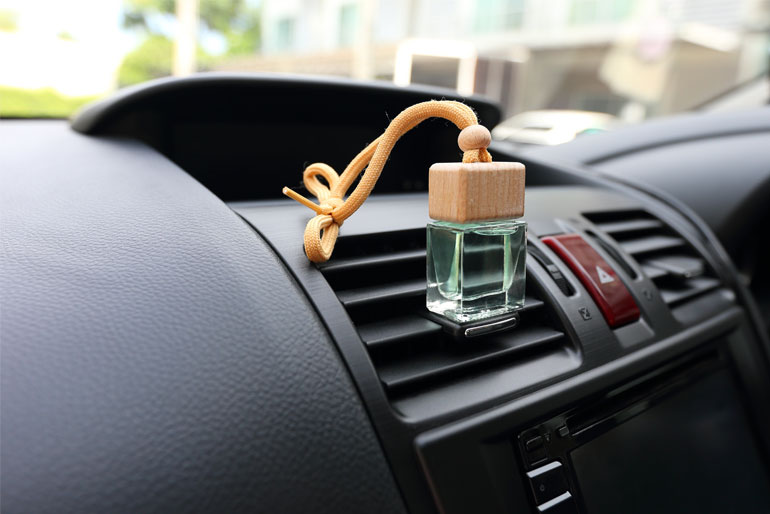
Car air fresheners occupy an appealing corner of the consumer products market. They are useful but personal, inexpensive to ship and easy to customize. A customer might buy one for its fragrance, but the design hanging from the mirror can also express a sense of humor, an interest in cars or an attachment to a particular lifestyle.
That makes air fresheners an accessible product for a new entrepreneur. However, creating a real brand takes more than printing a logo on some scented cardboard. The artwork, fragrance, packaging and personality all need to feel as though they belong together.
Here is how to take a car air freshener brand from an early idea to a product that is ready to sell.
Start With a Specific Customer
Before choosing a name or designing a logo, decide who the brand is meant to attract.
A collection created for performance car enthusiasts will look different from one aimed at pet owners, families or shoppers searching for funny novelty gifts. An automotive brand might use vehicle illustrations, racing-inspired typography and leather or fresh air fragrances. A pet-focused company could favor cheerful photographs, softer colors and clean linen scents.
Try to describe your customer in one sentence. The brand is for younger car enthusiasts who enjoy bold artwork, collectible designs and modern fragrances for instance.
A focused customer makes every later decision easier, from the appearance of the packaging to the stores where the products should be sold. Trying to appeal to every driver often produces a generic brand that appeals strongly to no one. And you don’t have the capital to compete with Little Trees (at least not yet).
Give the Brand a Point of View
There are already many automotive air fresheners on the market, so your brand needs a recognizable difference. That does not mean inventing an entirely new product. It means giving customers a reason to remember yours.
The brand could be built around original automotive illustrations, unusual fragrances, funny sayings, local culture, nostalgic imagery or artist collaborations. Another option is to focus on premium presentation with sophisticated scents and minimalist packaging. Either way, nail down what your brand means and how you want it to be seen by potential customers.
Choose a Name That Can Grow
A strong name should be easy to say, spell and remember. It should also leave room for expansion. A name tied too closely to cardboard hanging fresheners could become restrictive if you eventually add vent clips, sprays or other automotive products down the road.
Search each possible name online and check domain availability, social media accounts, marketplaces and existing automotive or fragrance companies. In the United States, the USPTO trademark database can help you identify federal trademark applications and registrations.
Avoid using vehicle company logos, celebrities, sports teams, movie characters or artwork found online unless you have permission. Original or properly licensed artwork gives the brand a safer foundation.
Build a Consistent Visual Identity
The logo is only one part of the brand. Customers also judge the colors, typography, illustrations, packaging, photography and social media presentation.
Your products should look like members of the same family. You could use a consistent illustration style, repeat the same border treatment or position the logo in the same place on each design.
Keep in mind that the finished air freshener will be small. Detailed artwork and thin lettering can become difficult to see after printing. Test every design at its actual size before approving it.
Bold shapes and clean silhouettes generally reproduce better than complicated scenes. Custom shapes can make the product memorable, but thin projections and narrow sections may bend or tear. A manufacturer may recommend simplifying the cut line while keeping the printed details inside it.
The front can feature the main artwork, while the back can contain the logo, scent name, website or QR code. Avoid overcrowding it. If you include a QR code, print and test it at the intended production size.
Keep the First Collection Small
Launching with too many designs and fragrances creates an immediate inventory problem. Every combination becomes another product that must be ordered, stored, photographed and sold.
A practical first collection might contain three coordinated designs with one fragrance each. You could also offer one signature design in several scents.
A smaller launch gives customers enough choice while allowing you to discover what they actually want. Assign a stock-keeping unit, or SKU, to each variation from the beginning so that sales and reorders remain organized.
Make Fragrance Part of the Story
The scent should support the visual personality of the product. An off-road design could work with pine or cedar, while a retro luxury car might suit leather-inspired, amber or sandalwood notes. Bright cartoon artwork could pair naturally with citrus, cherry or tropical fragrances.
Begin with scents that customers can easily understand. More unusual options can be introduced later as seasonal or limited-edition releases. And always order fragrance samples and test them in a vehicle. A scent that seems subtle in an open room can become overpowering inside a warm, closed car.
Ask manufacturers how fragrance intensity is controlled, how the product should be stored and how long the scent is expected to last. Treat lifespan estimates as general guidance because heat, airflow and customer use can all affect performance.
Request available safety documentation as well. The International Fragrance Association explains that its standards may prohibit or restrict certain fragrance ingredients. However, its industry standards do not replace applicable local laws.
Avoid unsupported descriptions such as “non-toxic,” “chemical-free” or “allergy-safe.” Only make claims you can support with reliable information about the finished product.
Where to Buy Custom Air Fresheners?
Most new brands hire a custom-printing company or private-label manufacturer rather than producing the fresheners themselves.
For early prototypes, look for a supplier with a low minimum order. Custom Comet currently offers custom shapes and retail-ready products. Their website states you can do a 5-piece sample order which they’ll credit 50% back when you place a larger order.
PhotoAirFresheners.com also advertises no-minimum personalized air fresheners and a proofing process. Its service appears especially suitable for photographs, pets, people, cars and novelty products.
When you are ready for wholesale quantities, CustomAirFresheners.net offers custom shapes, two-sided printing, multiple scents, and retail-packaging options. Its published pricing begins at 100 units and falls as quantities increase. They are one of the best options for ordering custom air fresheners in bulk.
Brands interested in vent clips, wooden diffusers, gels or other formats may need an OEM or private-label manufacturer. IKEDA Scents, for example, advertises services covering fragrance selection, product design, packaging, sampling and mass production.
Never Skip the Sample Stage
Order samples from several manufacturers before choosing one. Compare the printing, colors, material thickness, cut edges, string attachment, fragrance and packaging.
Then test the product in a real vehicle. Notice whether the scent is pleasant or overpowering, whether the artwork fades and whether the hanging hole allows the design to sit correctly.
Give each supplier the same specifications when requesting quotes. Include the size, shape, number of designs, fragrances, quantity and packaging requirements. Ask about setup charges, samples, proof revisions, production times, defect policies and shipping.
The cheapest supplier is not automatically the best choice. Reliable communication, consistent printing and well-sealed packaging may justify a slightly higher price.
Use Packaging to Increase Perceived Value
An air freshener is both an illustrated object and a fragrance product. Its packaging must preserve the scent while presenting the brand attractively.
A clear sealed pouch is the simplest option. A branded header card provides space for the logo, fragrance name, barcode, instructions and required information. Premium products might use a printed pouch, envelope or box.
Customers should be able to identify the design, scent and brand immediately. Good packaging can make a small product feel like an affordable gift instead of a disposable giveaway.
Calculate the Complete Cost
The manufacturer’s unit quote is only part of the cost. You may also need to pay for prototypes, setup, packaging, shipping, duties, labels, payment processing, marketplace commissions, fulfillment supplies, advertising and damaged inventory.
A freshener that costs 90 cents to manufacture could have a true cost of more than two dollars by the time it reaches the customer. Selling it for three dollars would leave little room for discounts, advertising or wholesale accounts.
Launch Small and Learn
Car air fresheners can be sold through your own website, online marketplaces like Etsy, car shows, gift shops, detail businesses, dealerships and car washes. Local automotive companies may also be interested in wholesale or co-branded designs.
Begin with a limited production run and watch which combinations of artwork and fragrance sell. Pay attention to customer comments about packaging, scent strength, price and longevity.
One negative response may reflect personal taste, especially with fragrance. Several similar complaints can reveal a genuine product problem.
Final Thoughts
A successful car air freshener brand begins with a specific audience and a recognizable idea. From there, it needs consistent artwork, appealing fragrances, reliable manufacturing, protective packaging and realistic pricing.
Start with a small collection, order physical samples and calculate the complete cost before purchasing large quantities. Move from low-minimum prototyping to wholesale or private-label production only when demand supports it.
The goal is not simply to place fragrance inside a package. It is to create a product whose design, scent and presentation express the same personality. A personality that customers will recognize before they even open the wrapper.