





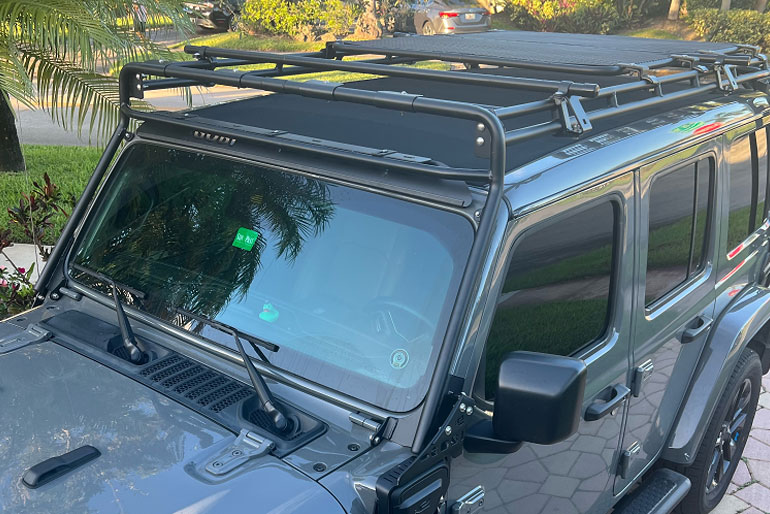
Most aftermarket racks built for the Wrangler JL and JK are rated for roughly 150 to 300 pounds while driving and 500 to 1,000+ pounds while parked. The real ceiling depends on how the rack attaches to the vehicle, not just on the rack itself. A system clamped to a hardtop will always carry less than one bolted into the windshield frame and body tub.
If you’re planning to haul a rooftop tent, recovery boards, a kayak, or a spare fuel can up top, knowing these numbers keeps your gear secure, your top intact, and your handling predictable on and off pavement.
Dynamic vs. Static Load: The Two Numbers That Matter
Every reputable rack maker publishes two ratings, and confusing them is the most common loading mistake.
Dynamic load is the maximum the rack can safely carry while the vehicle is moving. Braking, cornering, washboard roads, and rock crawling multiply the forces acting on the mounts, so this figure is always the lower of the two.
Static load is what the system supports while parked. Because nothing is bouncing or swaying, this rating is often three to five times higher. It’s the figure that matters when two adults and their bedding climb into a rooftop tent at camp.
A simple rule: plan your trip around the driving rating, and plan your campsite around the parked rating.
Typical Capacity by Mounting Style
The attachment method sets the limit more than any other factor. Here’s how the common setups compare (approximate ranges; always confirm your specific product’s spec sheet):
| Mounting style | Approx. driving rating | Approx. parked rating | Best for |
| Hardtop-mounted rails | 100–165 lb | 300–500 lb | Light cargo, bikes, a single kayak |
| Windshield + body-tub (frame-style) | 250–400 lb | 800–1,500 lb | Rooftop tents, overlanding loads |
| Full exo-cage or roll-cage-integrated rack | 300–500 lb | 1,000+ lb | Heavy tents, water, fuel |
| Soft-top or bare roof | Not recommended | Not recommended | Use a body-mounted system instead |
Why hardtop systems carry less: The factory fiberglass top and its removable Freedom Panels weren’t engineered as structural load paths. Rails that bolt into the top spread weight across a relatively thin shell, so manufacturers cap ratings conservatively.
Why body-mounted systems carry more: Racks that anchor to the windshield frame and the rear tub (or the roll cage hardpoints) transfer weight directly into the steel structure. That design also lets you pull the top off without unloading your gear.
Does the 4xe Plug-In Hybrid Change Anything?
The plug-in hybrid’s body shell matches the gas-powered JL, so most systems fit both. What differs is the overall vehicle math. The hybrid’s battery pack adds several hundred pounds, which trims the available payload left for passengers, cargo, and anything on the roof.
Before you load up, check the payload sticker on the driver’s door jamb and subtract occupants and interior gear. Whatever remains is your true budget for the rack and its contents. If you’re shopping specifically for this model, a purpose-matched Jeep Wrangler 4xe roof rack ensures proper fitment around the hybrid’s unique trim and charging-port placement.
Added height also affects efficiency. A loaded rack increases aerodynamic drag, which can noticeably reduce electric-only range on highway trips.
How to Calculate Your Real Limit
Your safe capacity is the lowest of three numbers:
- The rack manufacturer’s driving rating.
- The rating of the mounting hardware or crossbars, if sold separately.
- Remaining vehicle payload after people and interior cargo.
Remember to count the rack’s own weight. A steel platform can weigh 60 to 100 pounds before you add a single item, eating into your allowance.
Smart Loading Tips
- Keep heavy items low and centered. Weight up high raises the center of gravity, increasing body roll and rollover risk on off-camber trails.
- Distribute evenly front to back. Concentrating mass over one crossbar overstresses those mounts.
- Use rated straps and recheck them. Vibration loosens fasteners; inspect after the first 50 miles and at every fuel stop.
- Torque bolts to spec. Under-tightened hardware is a leading cause of rack failure.
- Mind your clearance. Measure total height before entering parking garages or drive-thrus.
Frequently Asked Questions
Can I put a rooftop tent on a factory hardtop?
Usually not. Most tents weigh 100 to 200 pounds empty, which can approach or exceed hardtop-rail limits. A frame-anchored system is the safer choice.
Can I stand on my rack?
Only if the manufacturer explicitly rates it for foot traffic. Many platforms are, but a single person concentrates load on a small area, so check first.
Do Jeep’s factory roof rails carry more?
Jeep doesn’t market high-capacity OEM rails for the Wrangler. Mopar accessory systems exist but are designed for lighter cargo; consult your dealer for the exact figure on your model year.
What happens if I exceed the rating?
You risk cracked mounts, a damaged top, voided warranties, and gear detaching at speed, which is a serious hazard to other drivers.
For most owners, plan on 150 to 300 pounds while moving and several times that once parked, with body-mounted designs offering the most headroom. Read the spec sheet, factor in total payload, and load low and balanced. Do that, and your rig will carry everything an adventure demands without compromising safety or the trail-ready handling that makes a Wrangler a Wrangler.