





A successful car tow starts well before the highway. A careful pre-trip check helps protect the vehicle, keep the trailer stable, and reduce the chance of an avoidable roadside stop. Work through these ten checks before loading, then inspect the setup again once everything is secured.
Plan to prevent damage when hauling your car on a trailer by following the trailer and vehicle manufacturers’ instructions. Confirm the tow vehicle is rated for the combined load, and choose equipment designed for the car’s weight and dimensions. If the vehicle has special loading or transport requirements, check its owner’s manual first.
1. Confirm Towing Capacity
Check the tow vehicle’s manual and door label for towing limits, payload, and tongue-weight guidance. Add the trailer’s weight to the car’s weight, along with any cargo or equipment. Keep the total within the lowest applicable rating. If the numbers are unclear, pause and ask the vehicle or trailer manufacturer for guidance.
2. Inspect Trailer Tires
Check each tire for cuts, cracks, bulges, or uneven wear. Measure pressure when the tires are cold and inflate them to the trailer manufacturer’s recommended level, not the maximum printed on the tire sidewall. Inspect the spare too, and verify that its size and rating are appropriate.
3. Check the Hitch And Coupler
Make sure the hitch is rated for the load and securely attached to the tow vehicle. Confirm the coupler fits the hitch ball, closes fully, and locks in place. Insert the retaining pin or lock, then check that the connection has no unusual movement.
4. Attach Safety Chains
Cross the safety chains beneath the coupler and connect them to the tow vehicle’s designated attachment points. Leave enough slack for turns, but not so much that the chains drag on the road. Check the connection and condition of each chain before departure.
5. Test Lights And Wiring
Connect the electrical plug and test running lights, brake lights, and turn signals. Check that wires are secure, clear of sharp edges, and not hanging where they could snag. Ask someone to confirm the lights at the rear of the trailer while each signal is activated.
6. Verify Trailer Brakes
If the trailer has brakes, inspect the system and follow the manufacturer’s steps for testing it. Check the brake controller setup, if fitted, and confirm the breakaway cable is attached as instructed. Rules for trailer brakes vary by location and load, so review applicable requirements before traveling. The Federal Motor Carrier Safety Administration’s cargo securement guidance offers useful background on safe transport practices.
7. Load The Car Carefully
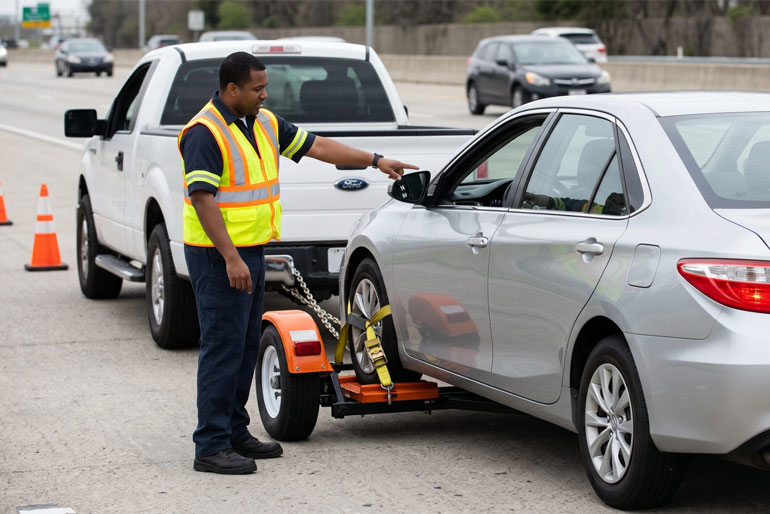
Center the car on the trailer and position it as directed by the trailer manufacturer. Use the designated ramps and loading points, and keep bystanders away from the loading path. Set the parking brake while securing the car, then follow the vehicle’s manual regarding transmission position and other transport settings.
8. Secure The Vehicle
Use appropriately rated straps or tie-downs at the recommended points. Tighten them evenly and check that they do not press against brake lines, wiring, or fragile body parts. Secure loose accessories, and make sure the car cannot roll or shift.
9. Check Weight Balance
Confirm the load is distributed as the trailer manufacturer specifies, with the correct tongue weight and no overloaded axle. Poor balance can make a trailer sway or handle unpredictably. Reposition the vehicle only as instructed, and never exceed the tow vehicle, hitch, or trailer ratings.
10. Do A Final Walk-Around
Before pulling out, check the hitch lock, chains, straps, tires, lights, and ramps. Stow tools and chocks, close the vehicle’s windows, and remove loose items. After a short, safe drive, stop to recheck straps, connections, and tire condition. Keep extra stopping distance and take turns gradually throughout the trip.