




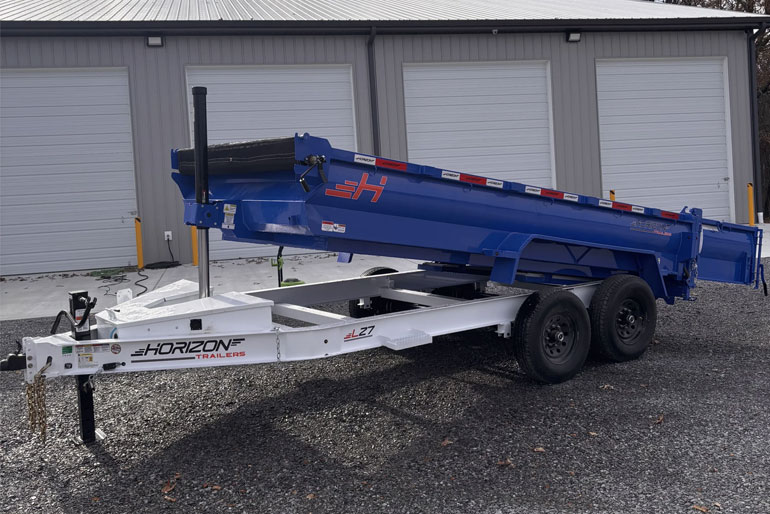
A well maintained trailer should last 15 to 20 years or more. A neglected one can become a safety hazard within a few seasons. The good news is that trailer maintenance is straightforward, and most of it you can handle yourself with basic tools and a couple hours of your time. Here’s what to focus on and how often to do it.
Inspect Your Tires and Wheels Before Every Trip
Tires are the most common point of failure on any trailer. Check tire pressure before every trip using a quality gauge, not just a visual inspection. Underinflated tires overheat, wear unevenly, and are far more likely to blow out at highway speeds. The correct PSI is printed on the tire sidewall, not on the trailer itself.
Look at tread depth while you’re at it. Trailer tires wear differently than vehicle tires because they don’t steer or receive power from the drivetrain. They tend to develop flat spots from sitting in one position for extended periods. If your trailer sits unused for weeks at a time, move it periodically or use jack stands to take the weight off the tires.
Wheel bearings need repacking with grease at least once a year, or every 10,000 to 12,000 miles. This is probably the single most important maintenance task on any trailer. Failed wheel bearings can cause a wheel to seize or separate entirely while you’re driving.
Check Your Brakes and Brake Controller
If your trailer has electric brakes, test them before every loaded trip. Engage the manual override on your brake controller and confirm you feel the trailer braking. Weak response usually means worn brake shoes, a wiring issue, or a failing magnet inside the brake drum.
Inspect brake shoes and drums at least once a year. Replace shoes when they’re worn to 1/16 inch or less. While you’re in there, check for any signs of fluid contamination on the brake surfaces, which can reduce stopping power significantly.
Keep the Electrical System Reliable
Wiring problems cause more roadside headaches than almost anything else on a trailer. Walk around the trailer with someone operating the lights from the tow vehicle. Check all running lights, brake lights, and turn signals. Replace any burned-out bulbs immediately because a trailer with non-functioning lights is both illegal and dangerous.
Corrosion is the main enemy of trailer wiring, especially if you haul in rain or on salted winter roads. Apply dielectric grease to all plug connections. If you notice intermittent flickering, the ground wire is usually the culprit. Clean the ground connection point down to bare metal, reattach it, and seal it against moisture.
Maintain the Frame, Bed, and Hardware
Rust starts small and spreads fast, particularly on steel frame trailers. After every use in wet or muddy conditions, rinse the underside of the trailer with a hose. Pay attention to areas where dirt and debris collect, like inside channel iron and around weld joints.
Touch up any paint chips or bare metal spots with a rust-inhibiting primer and matching paint. If your trailer has a wood deck, check for soft spots, cracked boards, and loose fasteners. Replace damaged boards before they fail under a load. Treated lumber lasts longer, but it still needs periodic inspection.
Latch mechanisms, ramp hinges, and tie-down points all take a beating during regular use. Lubricate hinges and moving parts with a quality spray lubricant or grease. Tighten any loose bolts and replace hardware that shows significant wear or deformation.
Seasonal Trailer Care
Before winter storage, fully inflate tires or use jack stands. Disconnect and charge the battery if your trailer has one. Grease all fittings. Apply a corrosion inhibitor to exposed metal. Cover the trailer or store it indoors if possible.
Spring startup requires a full inspection before the first trip of the season. Check tire pressure and condition, test all lights, verify brake function, repack wheel bearings if it’s been a year, and look over every bolt and fastener on the frame. A thorough spring inspection takes about an hour and can prevent serious problems down the road. For trailer owners who prefer to leave the mechanical work to a professional, service departments at dealers like Loewen 1776 Trailers & Truck Bodies handle annual inspections, brake jobs, bearing repacks, and electrical troubleshooting. Having a qualified technician go over everything once a year is a solid investment, especially for trailers that see heavy commercial use.
Frequently Asked Questions
How often should I grease my trailer wheel bearings?
At minimum, once per year or every 10,000 to 12,000 miles, whichever comes first. If you frequently haul heavy loads, submerge the hubs (boat trailers), or drive in wet conditions, increase that frequency to every 6 months.
What is the most common cause of trailer tire blowouts?
Underinflation is the leading cause. Running tires below their rated PSI generates excessive heat, weakens the sidewall, and eventually causes a blowout. Age is the second biggest factor. Trailer tires should be replaced every 5 to 6 years regardless of tread depth, because the rubber compound degrades over time from UV exposure and oxidation.
Do I need to maintain my trailer if I only use it a few times a year?
Absolutely. Trailers that sit idle actually need more attention in some areas. Tires develop flat spots, batteries lose charge, brake components can seize from corrosion, and moisture collects inside electrical connections. A quick inspection before and after each use goes a long way.
Can I do trailer maintenance myself or should I hire a professional?
Most routine maintenance like tire checks, light replacement, lubrication, and visual inspections are well within a DIY owner’s ability. Brake work, bearing repacks, and electrical diagnostics are more involved and may be better left to a professional if you’re not comfortable with the process.