







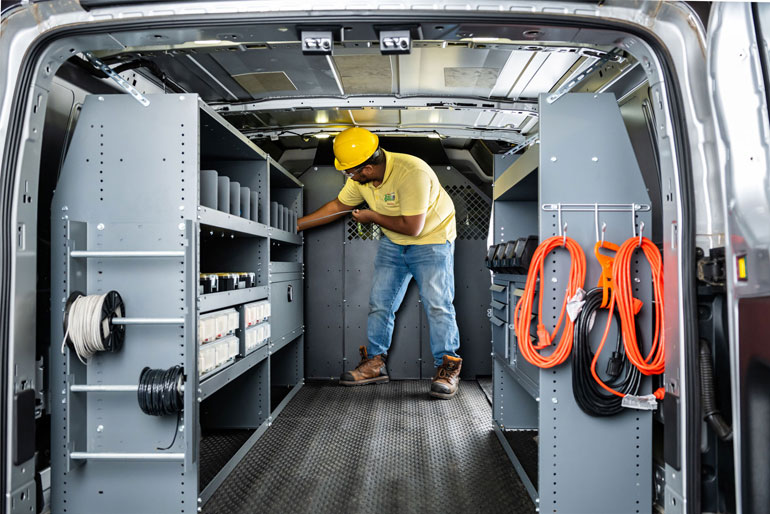
An HVAC service van must carry enough tools, diagnostic equipment, replacement components, refrigerant-related supplies, and safety gear to handle a wide range of heating and cooling calls. Without a deliberate organization system, technicians lose valuable time searching for parts or returning to the shop. Professionally designed HVAC van shelving turns the vehicle into an efficient mobile workspace that supports faster diagnostics, more first-visit repairs, and higher daily service capacity.
For HVAC companies operating throughout the Tri-State region, Mercedes-Benz Van Center of West Chester is a trusted provider of high-quality commercial vehicles, specialized upfit solutions, and dependable service support.
What Is the Best Shelving Setup for an HVAC Van?
The best HVAC van shelving setup combines adjustable shelves, labeled parts bins, secure tool drawers, refrigerant-cylinder storage, and dedicated space for larger equipment. Frequently used components should be positioned near the side or rear doors, while heavier equipment should be secured closer to the floor.
The final layout should reflect the technician’s responsibilities. A residential service technician may need extensive small-parts storage, while an installation crew may require more open cargo space for ductwork, equipment, and job-specific materials.
Why HVAC Van Organization Matters
Heating and cooling technicians rarely know exactly what they will encounter before arriving at a service call. A basic maintenance appointment can reveal a failed capacitor, damaged contactor, clogged drain, malfunctioning control board, or airflow problem.
A properly stocked and organized van helps technicians respond to these situations without leaving the property to obtain common parts.
Effective HVAC van shelving can help a company:
- Complete more repairs during the first visit
- Reduce time spent locating tools and components
- Limit unnecessary supply-house trips
- Protect diagnostic and electronic equipment
- Maintain accurate parts inventory
- Improve technician safety
- Standardize operations across multiple vehicles
- Increase the number of appointments completed each day
The objective is not simply to fit more inventory inside the van. The objective is to create a repeatable workflow that reduces wasted time and supports profitable service delivery.
Essential Components of HVAC Van Shelving
Adjustable Shelving
HVAC technicians carry components of many different shapes and sizes. Adjustable commercial shelving can accommodate motors, filters, thermostats, control boards, contactors, capacitors, repair kits, and packaged supplies.
Shelf dividers and raised edges help prevent inventory from sliding or becoming mixed while the vehicle is moving. Modular shelving also makes it easier to update the layout as services and inventory requirements change.
Labeled Small-Parts Bins
Small components can quickly become disorganized when stored in open boxes or unmarked containers. Clearly labeled bins make it easier to identify parts and establish consistent replenishment procedures.
Common bin categories may include:
- Capacitors
- Contactors and relays
- Fuses and breakers
- Wire connectors
- Fasteners
- Pressure switches
- Drain fittings
- Thermostat wire
- Electrical terminals
- Valves and repair components
Frequently used items should be stored at a comfortable height and close to the vehicle’s primary access point.
Secure Tool Drawers
Lockable drawers provide protected storage for hand tools, meters, gauges, cordless tools, combustion-testing equipment, and other valuable devices. Drawer inserts can keep smaller tools separated and help technicians see when equipment is missing.
Diagnostic tools should be stored away from loose materials, moisture, and heavy equipment that could cause damage during transportation.
Refrigerant-Cylinder Storage
Refrigerant cylinders require dedicated storage that prevents movement while the vehicle is in transit. Secure racks or approved restraint systems can keep cylinders upright and separated from other cargo.
The storage configuration should also support appropriate ventilation and comply with relevant transportation, manufacturer, and workplace safety requirements. Cylinders should never be left unsecured in the cargo area.
Hose, Cord, and Tubing Organization
Refrigerant hoses, extension cords, vacuum-pump hoses, and flexible tubing can create clutter and become damaged if they are stored improperly.
Hooks, reels, and dedicated holders can keep these items organized while making them easier to inspect. Separating hoses from sharp tools and heavy equipment can also extend their usable life.
Storage for Large HVAC Equipment
Vacuum pumps, recovery machines, nitrogen tanks, drain-cleaning equipment, ladders, and portable testing systems require more space than ordinary hand tools.
Heavy equipment should generally remain low and be secured with commercial-grade mounts, brackets, or restraints. Frequently removed machinery should be positioned near a door to reduce lifting and carrying.
Interior Work Surface
A compact workbench can provide space for reviewing job information, testing components, preparing wiring connections, or completing paperwork. Depending on the van’s dimensions, the work surface may be fixed, folding, or incorporated into the shelving.
Task lighting and nearby electrical access can make the work area more practical during early-morning or after-hours service calls.
Designing Shelving Around HVAC Services
Residential HVAC Service Vans
Residential service technicians typically need access to a broad selection of diagnostic tools and common replacement parts. Their vans should be designed around speed, accessibility, and inventory visibility.
A practical residential layout may include:
- Small-parts bins near the side door
- Drawers for meters and hand tools
- Shelving for motors and packaged components
- Secure cylinder storage
- Dedicated thermostat inventory
- Space for filters and maintenance supplies
- Rear access to heavier equipment
Organizing parts by repair category can help technicians diagnose problems and locate related components more quickly.
HVAC Installation Vans
Installation crews require more open cargo capacity for equipment, duct materials, line sets, fittings, fasteners, and job-specific supplies. Permanent shelving should be balanced against the need to transport larger materials.
Installation-oriented vans may benefit from:
- Long-material storage
- Removable bins
- Fold-away shelving
- Ladder racks
- Open floor space
- Reinforced equipment restraints
- Dedicated storage for fabrication and installation tools
The layout should allow crews to load and unload equipment without removing routine tools or blocking essential inventory.
Commercial HVAC Service Vehicles
Commercial HVAC technicians may carry larger tools, more advanced diagnostic equipment, specialized controls, belts, contactors, and components for rooftop or packaged systems.
These vehicles may require deeper shelving, heavy-duty drawers, secure electronic-equipment storage, and exterior ladder access. Because commercial service calls vary considerably, modular storage can provide valuable flexibility.
Refrigeration Service Vans
Commercial refrigeration technicians often carry temperature controls, solenoid valves, relays, fan motors, refrigerant equipment, fittings, and electronic diagnostic devices.
Their van shelving should emphasize parts protection, clear labeling, cylinder security, and separation between clean electronic components and equipment exposed to oils or moisture.
Choosing the Right Van for an HVAC Shelving System
The van and its interior shelving should be planned as one operational system. Selecting shelving without considering payload, cargo dimensions, and technician workflow can result in an inefficient or overloaded vehicle.
Roof Height
A high-roof cargo van may allow technicians to stand inside the vehicle while accessing shelves or using a workbench. This can improve comfort and provide room for taller storage systems.
Cargo Length
Additional cargo length provides more space for shelving, machinery, filters, and installation materials. However, the vehicle should still be appropriate for the company’s routes, parking conditions, and service territory.
Payload Capacity
Shelving, tools, replacement parts, cylinders, fluids, and HVAC machinery can add significant weight. Businesses should estimate the combined weight of the upfit, equipment, and standard inventory before choosing a vehicle configuration.
Door Placement
Side and rear doors should support the technician’s normal workflow. High-use tools and parts can be placed near the side entrance, while heavier equipment may be positioned for removal through the rear doors.
Interior Lighting
Strong interior lighting makes it easier to identify components, read labels, and retrieve equipment safely. LED cargo lights and targeted workbench lighting can improve visibility without occupying meaningful storage space.
Electrical Capability
HVAC technicians may need to charge cordless-tool batteries, operate small equipment, power computers, or use diagnostic systems. Electrical requirements should be addressed during the upfit-planning process.
HVAC Van Safety and Security
Shelves, drawers, cylinders, and heavy machinery should be mounted using systems designed for commercial vehicles. Improvised storage can fail during sudden stops, sharp turns, or collisions.
A work-ready HVAC van may also include:
- A solid cargo partition
- Non-slip flooring
- Lockable cabinets
- Reinforced door locks
- Interior and exterior lighting
- Vehicle tracking
- First-aid supplies
- Fire extinguishers
- Ventilated cylinder storage
- Clearly designated chemical-storage areas
Technicians should receive training on proper loading, cylinder handling, equipment restraint, and inventory placement.
Common HVAC Van Shelving Mistakes
One of the most frequent mistakes is attempting to carry too much inventory. Overstocking adds weight, consumes useful space, and makes important parts harder to locate.
Other common mistakes include:
- Storing heavy equipment on upper shelves
- Leaving refrigerant cylinders unsecured
- Mixing electronic components with wet or oily tools
- Using residential shelving inside a commercial vehicle
- Blocking access to high-use inventory
- Failing to label storage bins
- Ignoring payload limitations
- Eliminating too much open floor space
- Using different layouts in every fleet vehicle
- Failing to account for seasonal inventory changes
An effective shelving system should support the technician’s work instead of turning the van into a crowded storage room.
How to Plan an HVAC Van Upfit
Start by documenting everything the technician regularly carries. Divide the inventory into frequently used components, diagnostic equipment, hand tools, power tools, cylinders, large machinery, and seasonal supplies.
Next, evaluate how the technician works:
- Which tools are used during nearly every appointment?
- Which replacement parts are installed most often?
- What equipment is the heaviest?
- Which items require lockable storage?
- What must be protected from moisture or impact?
- How much open cargo space is required?
- Does the technician need to work inside the vehicle?
- How will inventory change between heating and cooling seasons?
The answers can be used to create storage zones. High-use items should be easy to reach, heavy machinery should remain low, and valuable diagnostic equipment should be secured and protected.
Frequently Asked Questions About HVAC Van Shelving
What type of shelving is best for an HVAC van?
Adjustable commercial-grade shelving with dividers, parts bins, secure drawers, and equipment restraints is typically the most practical solution. The exact layout should be based on the technician’s responsibilities and normal inventory.
Should HVAC van shelving be steel or aluminum?
Steel shelving provides strength and durability for demanding applications. Aluminum is lighter and can help preserve payload capacity. The right choice depends on equipment weight, budget, vehicle specifications, and operating conditions.
How should refrigerant cylinders be stored in an HVAC van?
Cylinders should be secured upright with appropriate commercial restraints and stored according to applicable safety, ventilation, transportation, and manufacturer requirements. They should never be allowed to move freely inside the cargo area.
Is a high-roof cargo van better for HVAC technicians?
A high-roof van can provide more storage capacity and allow many technicians to stand inside the cargo area. It can be particularly useful when the technician regularly works from an interior bench or carries extensive inventory.
Can HVAC van shelving be customized?
Yes. HVAC van shelving can be configured with adjustable shelves, drawers, parts bins, cylinder restraints, ladder storage, workbenches, lighting, partitions, and equipment mounts. Modular systems can also be modified as the company’s services evolve.
Build an HVAC Van That Supports More Productive Service
Effective HVAC van shelving turns a commercial cargo van into a safer, more organized, and more productive mobile service platform. A well-planned layout helps technicians find parts faster, protect expensive equipment, reduce supply-house trips, and complete more repairs during the first visit.
HVAC companies serving Cincinnati, West Chester, Dayton, and communities throughout Ohio, Kentucky, and Indiana can consult Mercedes-Benz Van Center of West Chester when selecting a commercial van and planning a work-ready upfit. Coordinating the vehicle, shelving, equipment storage, service requirements, and future fleet needs can create a van configuration that supports long-term operational growth.